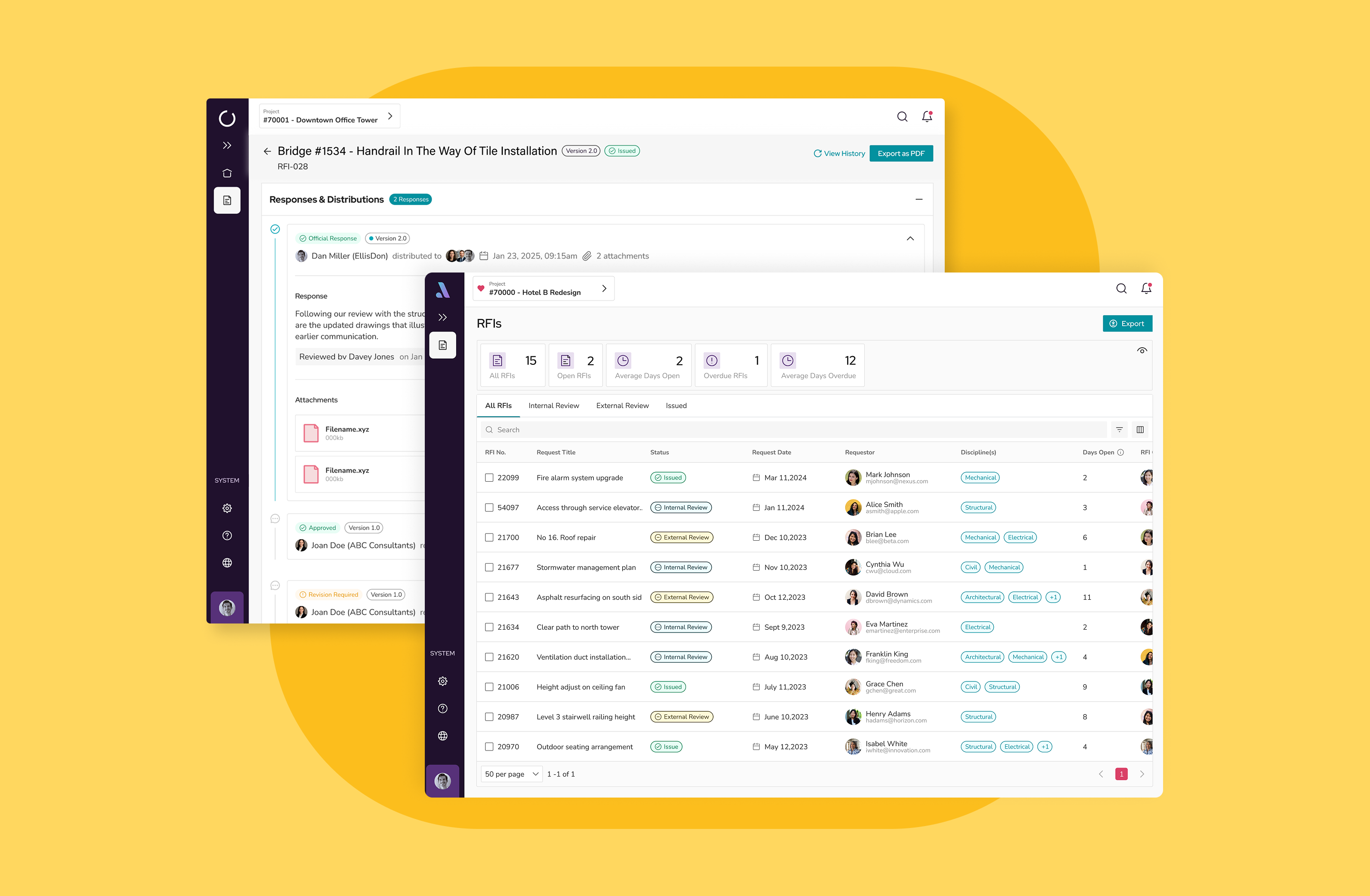
RFIs (Requests for Information) are how construction teams resolve ambiguity during a project. Who is responsible for a detail? Does a change require engineering sign-off? Every question that could delay work, introduce risk, or require rework goes through one. On large projects, hundreds are open at once. They also serve as a legal record and were often used in insurance claims.
RFIs begin as documented questions, typically from subcontractors, passed through the general contractor (EllisDon) to the appropriate consultant, architect, or engineer. At EllisDon, this process was split between email threads and an internal tool only accessible to internal staff. The people responsible for answering RFIs, external consultants, weren’t actually part of the system.
Because RFI communication happened off-platform, there was no way to see all open RFIs, no clear accountability, and no connection between unanswered RFIs and the work they were blocking. Project managers or document controllers would manually copy those responses into the system later, if they had time.
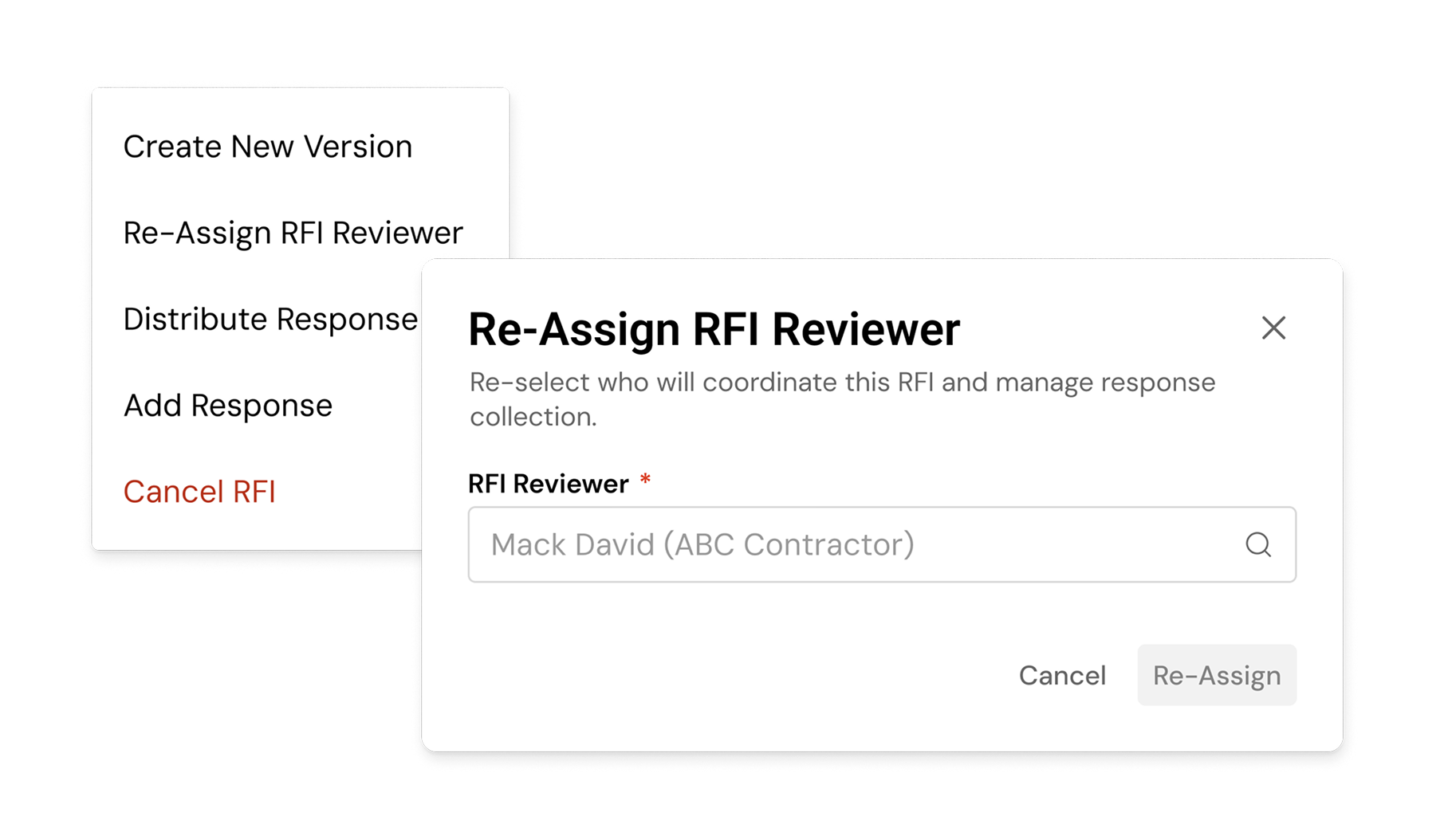
Stakeholder interviews across project managers, document coordinators, consultants, and legal teams revealed how far the consequences extended: bottlenecks, miscommunication, delays, and accountability gaps. The workflow itself was also too rigid, with fixed assignees and stages that couldn’t adapt when real-world conditions changed.
What did journey mapping reveal?
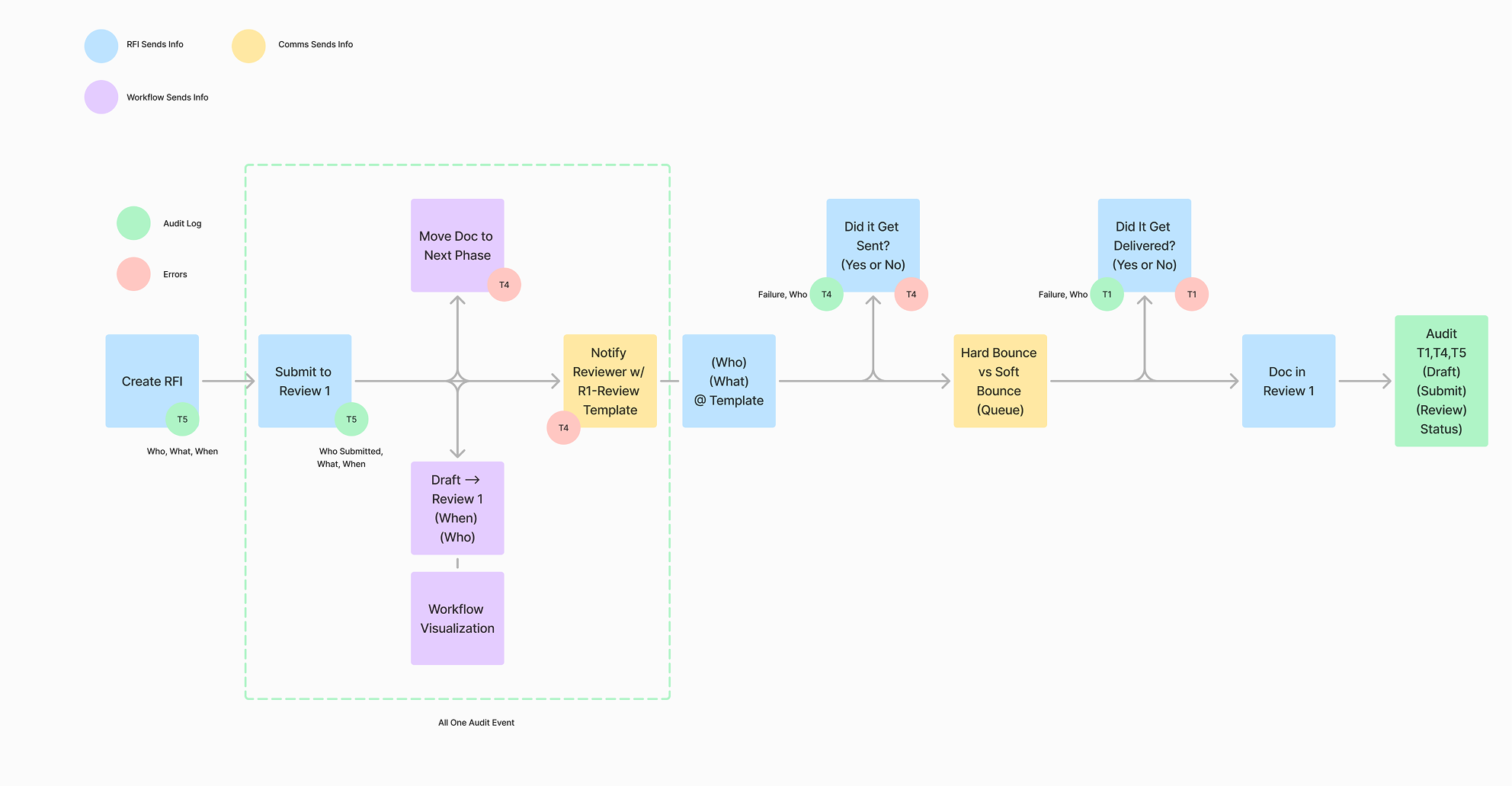
Mapping the full RFI lifecycle against actual email threads exposed a consistent pattern: every RFI was leading a double life. The “official” version in our tool, and the real version in someone’s inbox.
Field teams were also logging RFIs retroactively after conversations had already happened and decisions had already been made. The system wasn’t part of the workflow. It was documentation after the fact. The official record became a reconstruction, not a real-time capture. This held up trades, postponed material orders, and created ambiguity that led to costly rework.
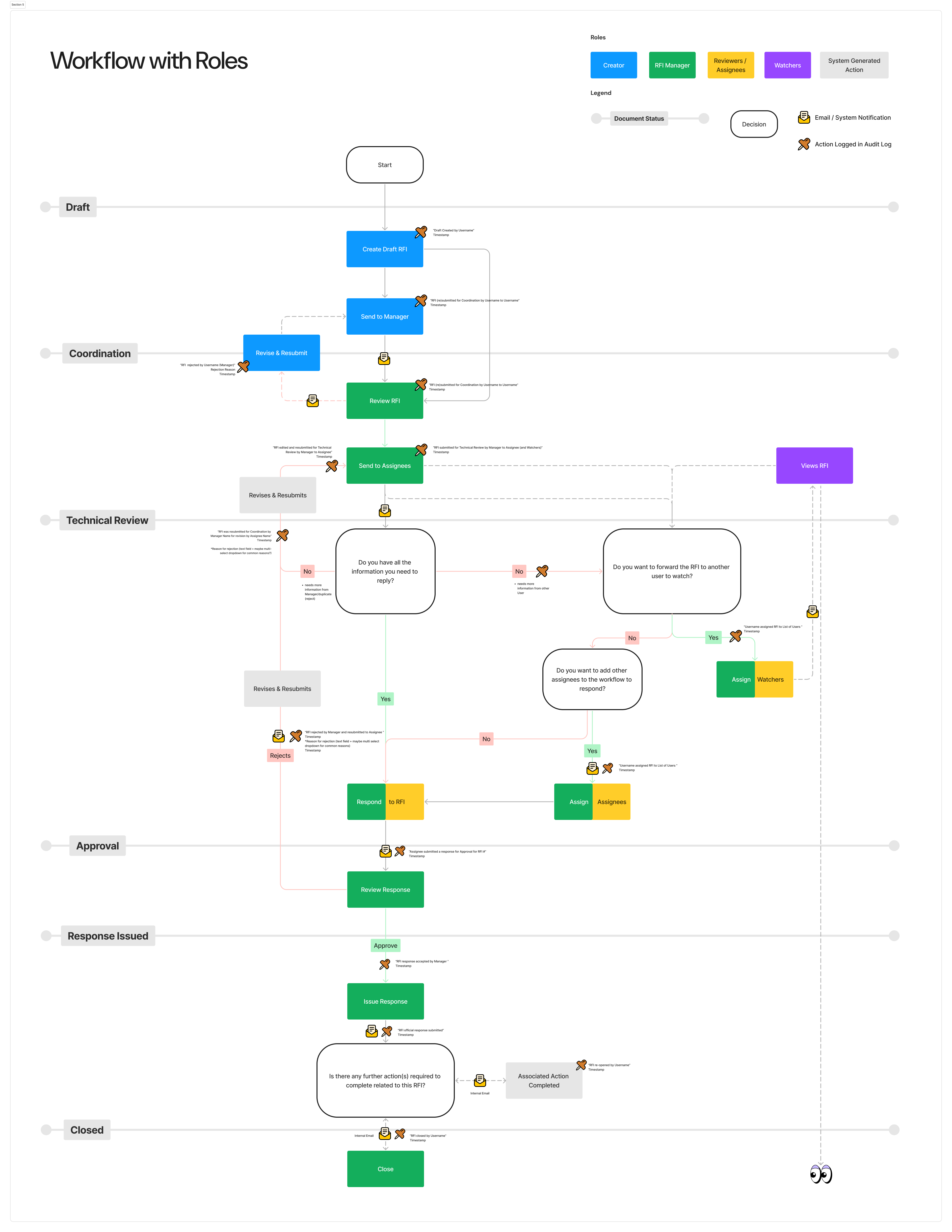
An RFI begins with someone on site asking a question related to the work they're doing on a project. The answer to that question can come from the general contractor or a consultant (architect, electrician, environmental governing body, etc). Any answers to this question need to be collected and distributed to all relevant parties so that the construction work can continue or adjust based on the question or answers. This process of asking, answering, clarifying amongst everyone involved means there is often a lot of back and forth, all of which must be tracked for insurance purposes.